What is an addressable fire alarm system and why is it required in GCC commercial buildings?
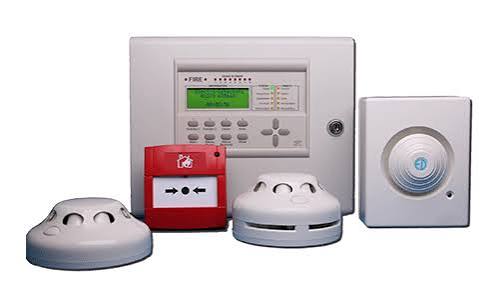
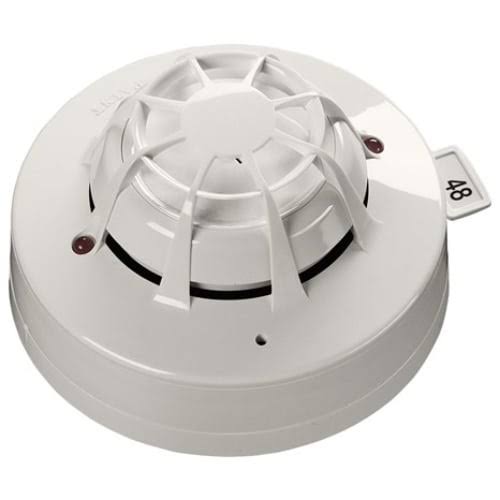
An addressable fire alarm system is one in which every device on the loop — every detector, call point, sounder, and module — has a unique address, allowing the control panel to identify the exact device that has activated. This means the panel can display "Detector 17, Office Floor 3, Zone 4B" rather than simply "Zone 4" — enabling a much faster and more precise emergency response. GCC Civil Defence authorities in Saudi Arabia, UAE, Kuwait, and Qatar require addressable systems for all commercial, institutional, and multi-storey residential buildings. Conventional (zone-only) systems that identify only the zone rather than the individual device are not accepted for new installations in these territories. Virtual Bridge designs exclusively addressable systems for commercial and institutional applications — it is both the code requirement and the technically correct specification for buildings of any meaningful size.
What is a cause-and-effect matrix and why does it matter?
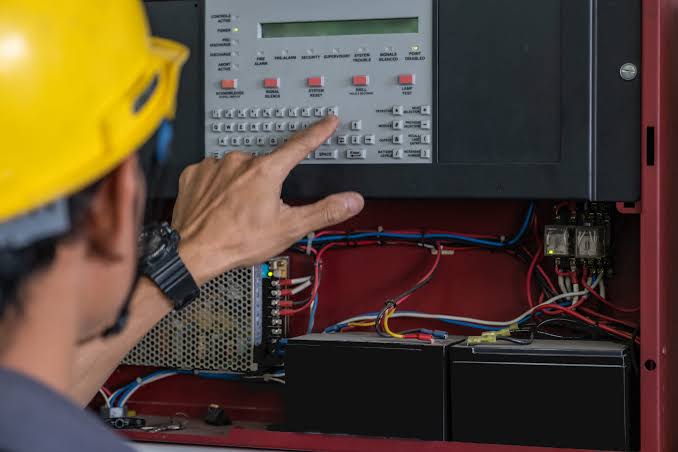
A cause-and-effect (C&E) matrix is the document — and the corresponding panel programming — that defines what the fire alarm system does in response to each possible activation. For every input (detector activation, call point, suppression flow switch, duct detector), the C&E matrix defines every output: which sounders and strobes activate, which HVAC systems shut down, which smoke dampers close, which access control doors release, which lifts recall, which suppression systems release, which BMS signals are transmitted. The C&E matrix is the engineering document that translates the building's fire strategy into the system's operational behaviour. Civil Defence authorities review the C&E matrix as part of the pre-approval process, and inspect the system against it during the final inspection. A system that deviates from the approved C&E — for example, HVAC that does not shut down on alarm in a zone where the design requires it — will fail inspection. Virtual Bridge develops the C&E matrix as a core design deliverable and programs the panel to match it before commissioning begins.
What is VESDA and when should it be specified?
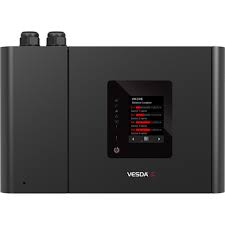
VESDA (Very Early Smoke Detection Apparatus) is an aspirating smoke detection system that actively draws air through a network of sampling pipes to a highly sensitive central detector. Unlike conventional point detectors that must wait for smoke to reach them by convection or diffusion, a VESDA system samples air from across the protected space and provides detection at smoke particle concentrations many times below the threshold of conventional detectors. VESDA should be specified in environments where early warning is critical and where conventional detectors are inadequate: data centres and server rooms (where fire suppression system discharge causes significant damage and must be initiated at the earliest possible stage), high-value archive stores, museums and art galleries, clean rooms, telecommunications facilities, and high-ceiling spaces where smoke dilution reduces conventional detector effectiveness. It is also specified in environments where conventional detectors would generate frequent false alarms from dust, steam, or aerosols — VESDA's sophisticated signal processing and sampling tube filter design significantly reduce false alarm rates in challenging environments.
Does the fire alarm system need to interface with the firefighting suppression system?
Yes — and this interface is one of the most critical integrations in the building's life-safety infrastructure. For gaseous suppression systems (FM-200, Novec, CO₂, Inergen), the fire alarm system provides the detection signal that initiates the suppression sequence — typically requiring activation of two detectors in the protected space (dual-knock detection) to minimise the risk of accidental discharge. The fire alarm panel controls the suppression release relay, the abort switch function, and the pre-discharge alarm and delay timer. For sprinkler systems, the fire alarm monitors sprinkler flow switches and pressure switches, providing alarm indication at the fire alarm panel when the sprinkler activates. For kitchen hood suppression systems, the fire alarm monitors the suppression system's activation. Virtual Bridge delivers both fire alarm and firefighting suppression systems, managing this interface under one contracting team — ensuring the detection-to-suppression-release sequence is correctly programmed and tested during commissioning.
What fire alarm cabling does GCC Civil Defence require?
GCC Civil Defence authorities require fire alarm cables to maintain circuit integrity during a fire — ensuring that the alarm signals, sounder circuits, and suppression release outputs continue to function for the duration of the evacuation. The cable type required depends on the territory and the specific circuit: Mineral Insulated Copper Clad (MICC) cable provides the highest circuit integrity rating and is required for critical circuits in some GCC territories; Enhanced fire-resistant cables to BS 7629 are widely accepted and provide circuit integrity to specified fire exposure conditions; Fire-rated PVC armoured cable (SWA) with a fire-resistant inner sheath is used for general fire alarm wiring. The critical requirement is that cables are tested and certified to maintain circuit integrity under fire conditions — not simply cables described as "fire resistant" without supporting test certification. Virtual Bridge specifies and installs circuit integrity cables appropriate to the Civil Defence requirements of each territory and the specific circuit function.
Does Virtual Bridge provide fire alarm maintenance after handover?
Yes. Virtual Bridge provides planned preventive maintenance (PPM) contracts for installed fire alarm systems — covering quarterly, biannual, and annual maintenance as required by BS 5839-1 and the applicable GCC authority maintenance requirements. Maintenance includes detector sensitivity testing (using calibrated test equipment to verify each detector's response is within its specified range), call point functional test, sounder and strobe output verification, battery and power supply test, panel fault log review, cause-and-effect output test, and suppression system interface relay test. Annual maintenance includes a full walk test of every device in the system. Fire alarm maintenance records are critical for insurance compliance and Civil Defence licence renewal — Virtual Bridge provides maintenance certificates and log books at each service visit. Reactive call-out for panel faults, detector failures, and false alarm investigations is also available under maintenance agreements across all Virtual Bridge territories.