virtual bridge

VirtualBridge - Navigation Header

Building Management Systems (BMS)

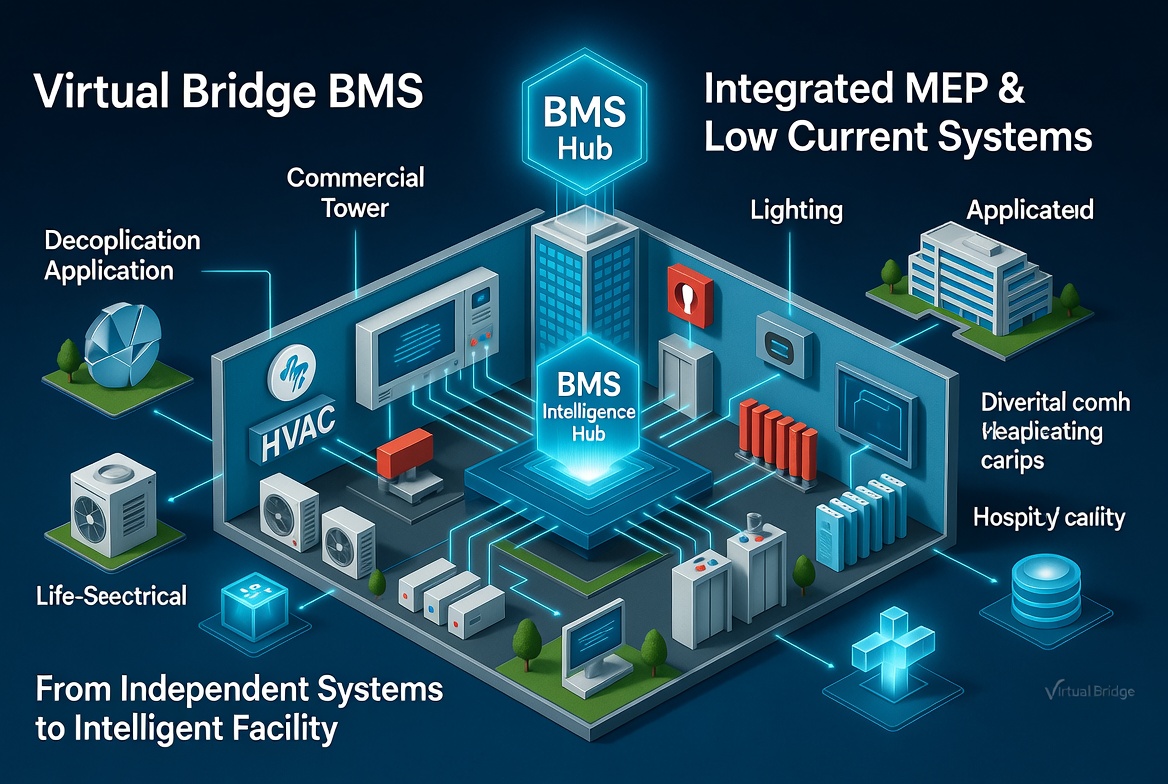
Virtual Bridge designs, installs, commissions, and maintains Building Management Systems (BMS) that connect a building’s mechanical, electrical, and life-safety systems into a single intelligent control and monitoring platform. From HVAC sequencing and energy metering in commercial towers to integrated facility management across multi-building hospital campuses — BMS is the operational intelligence layer that transforms a building from a collection of independent systems into a managed, optimised, and energy-efficient facility. Virtual Bridge delivers BMS as part of its integrated MEP and low current contracting scope, ensuring the BMS is designed alongside the systems it controls — not retrofitted after they are installed.


Low Current Systems — Virtual Bridge Co.

Systems Integrated
10+
HVAC, lighting, power, access, fire, CCTV & more
Protocols Supported
BACnet
BACnet · Modbus · LonWorks · KNX · DALI & OPC
Energy Savings
30%+
Typical energy reduction vs unmanaged building operation
Territories
6
Saudi Arabia, UAE, Kuwait, Qatar, Canada & Africa
BMS Services

Intelligent building control — from HVAC optimisation to enterprise facility management.

Virtual Bridge delivers the complete BMS scope — from field device installation and controller programming to graphical operator interfaces, remote access, energy dashboards, and enterprise facility management system integration.

HVAC Monitoring & Control
Complete BMS control of HVAC systems — chiller sequencing and capacity control, AHU start/stop, supply and return temperature control, chilled water differential pressure control, cooling tower fan staging, FCU group and individual control, VAV damper position and setpoint management, and DOAS heat recovery control. VSD speed control via BMS for pumps, fans, and chillers — directly delivering energy savings through intelligent part-load management.
Chiller Sequencing AHU Control VAV VSD
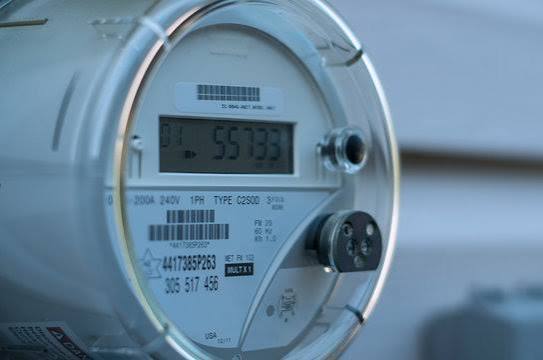
Energy Metering & Reporting
Sub-metering of electricity, water, gas, and thermal energy (BTU) at building, floor, zone, and tenant level — providing the data foundation for energy management, utility billing, sustainability reporting, and ISO 50001 energy management system compliance. Real-time energy dashboards, trend logging, consumption reports, and automatic anomaly alerting when consumption deviates from expected baselines.
Sub-Metering BTU Metering ISO 50001 Dashboard
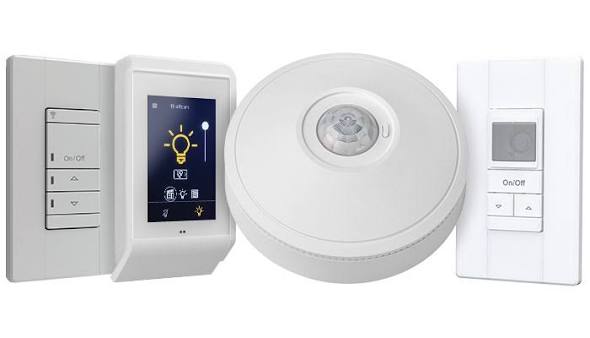
Lighting Control Systems
DALI and KNX lighting control integrated with BMS — occupancy-based dimming, daylight harvesting, scene management for different activities, time-scheduled switching, and corridor/common area lighting strategies. Integration with presence sensors, photocells, and access control occupancy data for fully automated lighting management that responds to actual building use rather than fixed schedules.
DALI KNX Daylight Harvesting Occupancy
Fault Detection & Diagnostics (FDD)
Automated fault detection and diagnostics — BMS trend data analysed against expected performance baselines to identify HVAC faults, sensor failures, control valve leakage, economiser lockout failures, and simultaneous heating-cooling waste before they become visible as comfort complaints or energy anomalies. FDD reduces reactive maintenance cost, extends equipment life, and prevents the energy waste that accumulates from undetected faults in large HVAC systems.
FDD Trend Analysis Predictive Automated
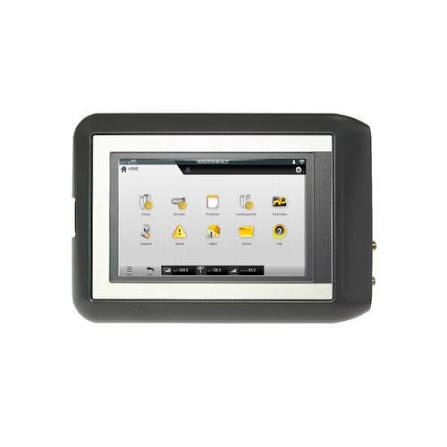
Operator Interface & Remote Access
Graphical operator workstation with building floor plan graphics, real-time system status, alarm management, trend display, and report generation. Web-based remote access for facilities management teams to monitor and adjust building systems from any location. Mobile interface for on-the-go status monitoring and alarm acknowledgement. Role-based access control for different operator permission levels.
Graphical UI Web Access Mobile Role-Based
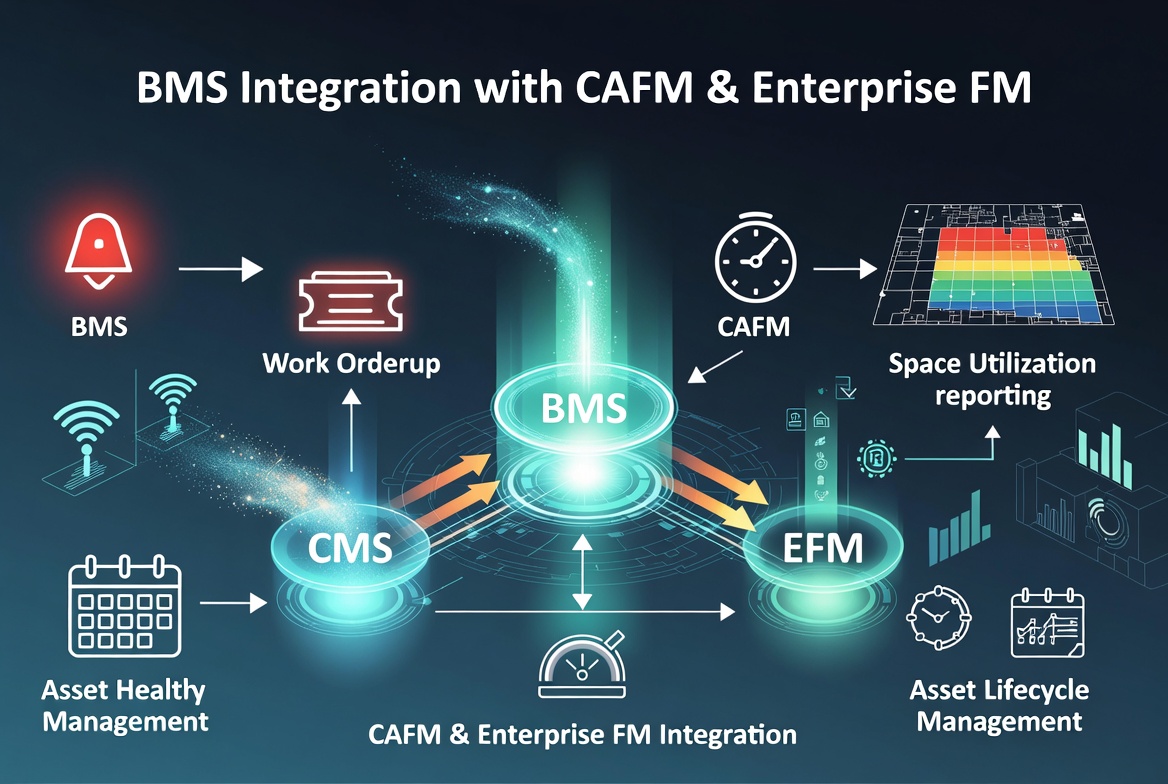
CAFM & Enterprise FM Integration
Integration of BMS with Computer-Aided Facility Management (CAFM) and Enterprise Facility Management (EFM) platforms — enabling automated work order generation from BMS alarm events, equipment runtime tracking for planned maintenance scheduling, space utilisation reporting from occupancy sensors, and asset lifecycle management driven by BMS condition data.
CAFM Work Orders Asset Management CMMS
BMS Is the Only Way to Achieve Sustained Energy Performance — Not Just Energy Design
A building designed to ASHRAE 90.1 or Estidama Pearl standards can consume significantly more energy than its design intent within months of occupation — as HVAC setpoints drift, controls fall into override, occupancy patterns change, and equipment faults go undetected. BMS is the system that maintains the building's operational performance against its design intent, providing the continuous visibility and control that facilities teams need to keep energy consumption aligned with design targets. In the GCC, where HVAC typically represents 50–70% of building energy consumption, a BMS that correctly sequences chillers, manages part-load conditions, and eliminates simultaneous heating and cooling can deliver verified energy savings of 20–40% versus an unmanaged building of the same design.
System Integration

The BMS is only as powerful as the systems it connects.

A BMS that controls only HVAC is a building controller. A BMS that integrates HVAC, lighting, power, fire alarm, access control, CCTV, water systems, and renewable energy is a building intelligence platform — delivering operational insight and optimisation across every building system from a single interface.

Mechanical & Electrical Integration

Chiller Plants & Cooling Towers
Chiller sequencing, capacity staging, chilled water supply temperature reset, condenser water temperature control, cooling tower fan staging, and pump VSD control — all optimised for part-load efficiency.
AHUs, FCUs & VAV Systems
AHU supply air temperature and humidity control, fan speed via VSD, outside air damper modulation, FCU individual and group temperature control, and VAV terminal unit airflow and temperature management.
Domestic Water & Pump Stations
Water tank level monitoring, booster pump set control and status, hot water calorifier temperature monitoring, and pump fault alarm — providing facility management visibility of water system performance.
LV Switchgear & Power Distribution
Main distribution board power monitoring (kW, kVAr, kWh, power factor), generator status and output monitoring, UPS status and battery health, and automatic demand response on peak tariff signals.
Solar PV & Battery Storage
Solar PV generation monitoring, battery state of charge, grid import/export metering, and BESS charge/discharge control — integrating renewable energy performance into the building energy management dashboard.
Smoke Control Systems
Stairwell and lobby pressurisation fan status and speed, smoke extract fan control, smoke damper position, and fire alarm integration for automatic smoke control activation on alarm signal.

Life-Safety & Security Integration

Fire Alarm Integration
Fire alarm zone status displayed on BMS — HVAC AHU shutdown, smoke damper closure, and stairwell pressurisation activation triggered by fire alarm signals via dry contact or BACnet interface.
Access Control Occupancy Data
Access control door event data used by BMS for occupancy-based HVAC and lighting control — extending pre-cooling time when occupancy data indicates early arrival, and reducing conditioning in unoccupied zones.
CCTV System Status
CCTV recording status and camera fault alerts integrated with BMS facility management — providing facilities teams with security system health visibility alongside building systems monitoring.
Firefighting Pump Room
Fire pump panel status, jockey pump operation, pressure monitoring, and tank level monitoring — providing facilities teams with continuous visibility of fire water supply system health.
Lift & Escalator Monitoring
Lift status, fault monitoring, and fire recall confirmation integrated with BMS — providing a unified view of vertical transportation alongside building services status.
Third-Party Protocols
BACnet IP/MS-TP, Modbus RTU/TCP, LonWorks, KNX, DALI, MBus, OPC-UA — Virtual Bridge integrates any system with an open protocol interface into the BMS platform.
How We Deliver

Point schedule to commissioned platform — one team.

Virtual Bridge manages the complete BMS project lifecycle — from point schedule development and controller selection through field device installation, panel wiring, network configuration, graphics development, control sequence programming, commissioning, and operator training. BMS is delivered as part of the integrated MEP scope — the BMS design team works alongside the HVAC, electrical, and plumbing teams from the start of the project, ensuring control sequences are developed to match the actual installed systems.

This integration of BMS design with MEP installation eliminates the most common BMS delivery failure: a BMS that has been programmed for a different configuration than the installed systems, requiring significant rework during commissioning to align the control sequences with reality.

BMS Commissioning Is Not Software Installation — It Is System Verification
A BMS is only delivering value when every control sequence is performing correctly in the actual building — not just in simulation. Virtual Bridge witnesses every control sequence during commissioning: chiller staging at different load levels, AHU response to occupancy signals, lighting scenes under actual conditions, energy metering accuracy against spot meter checks, and alarm response to field-simulated fault conditions. Commissioning reports document every sequence verified — not just a checklist of screens that have been configured.
01
Point Schedule & System Architecture
Development of the BMS point schedule — listing every monitored and controlled point in the building, its input/output type, engineering range, alarm limits, and connection to a specific BMS controller. System architecture drawing defining controller locations, network topology, server room, and operator workstation positions.
02
Control Sequence Development
Written control sequences for all HVAC, lighting, and energy systems — developed in coordination with the HVAC engineer and reviewed by the MEP consultant before programming begins. Sequences define exactly how every controlled system responds to every input condition, setpoint, time schedule, and fault state.
03
Field Device & Panel Installation
BMS controllers, DDC panels, temperature and humidity sensors, pressure sensors, flow meters, motorised valves, and actuators installed by Virtual Bridge's BMS installation team — coordinated with HVAC, electrical, and plumbing installation to ensure sensors and actuators are positioned correctly in the installed systems.
04
Software Programming & Graphics
BMS software configuration — control logic programming, setpoint configuration, alarm definition, trend logging setup, energy metering configuration, and graphical interface development with building floor plan schematics, system diagrams, and energy dashboards.
05
Commissioning, Optimisation & Training
Point-by-point commissioning of all field devices, control sequence functional testing, energy metering verification, alarm testing, integration interface testing, seasonal optimisation of setpoints and schedules, operator and facilities management training, and full handover documentation.
Technical Capabilities

Platforms, protocols, and integration scope.

A reference of Virtual Bridge's BMS technical scope — covering platforms qualified, communication protocols, control capabilities, and the full range of systems integrated under one BMS contracting scope.

Primary Protocol
BACnet
BACnet IP / BACnet MS-TP — open standard
Energy Reduction
30%+
Typical verified savings vs unmanaged operation
Platforms Qualified
8+
Schneider, Honeywell, Siemens, Distech & more
Gulf Optimised
45°C
Sequences calibrated for Gulf peak cooling conditions

BMS Platforms We Deploy

Schneider Electric EcoStruxure Building
Open BACnet platform — SmartX controllers, EBO operator workstation, enterprise-level reporting, and cloud connectivity for multi-site portfolio energy management.
Honeywell INNCOM & Enterprise Buildings Integrator
Enterprise BMS with deep HVAC integration, guestroom management for hospitality, and energy management reporting for commercial and mixed-use developments.
Siemens Desigo CC & HVAC Products
Integrated building operations platform — HVAC, fire safety, security, and energy on a single Desigo CC server with deep integration capability for complex multi-system buildings.
Distech Controls ECLYPSE
ASHRAE 135 BACnet native controllers with built-in HTML5 web interface — widely specified in GCC for new commercial developments requiring open, maintainable BMS platforms.
Delta Controls & KMC Controls
BACnet DDC controllers for commercial, healthcare, and education — cost-effective open platform with full BACnet compliance and strong third-party integration capability.
KNX & DALI for Lighting
KNX smart building controls and DALI lighting management integrated with BMS — providing unified building management of HVAC and lighting from one operator platform.

Gulf-Specific BMS Sequences

Chilled Water Temperature Reset
Dynamic chilled water supply temperature reset based on actual zone demand — reducing chiller lift and improving COP during part-load conditions in Gulf buildings where overnight loads are still significant.
Pre-Cooling Strategy
Early morning pre-cooling during off-peak tariff periods — building the thermal mass of the structure before peak occupancy to reduce peak demand charges and HVAC system peak load during working hours.
Demand Limiting & Load Shedding
Automated demand limiting to avoid peak tariff thresholds — temporarily adjusting chiller setpoints, deferring non-critical loads, and cycling discretionary equipment to stay within demand limit targets.
Outdoor Air Control — Gulf Humidity
Outdoor air economiser lockout during high-humidity Gulf conditions — preventing humid outdoor air from entering the building when it would increase cooling load rather than reduce it.
Unoccupied Setback & Night Purge
Automatic setpoint relaxation during unoccupied periods, and night purge using cooler night air where ambient conditions permit — further reducing daytime cooling energy requirement.
Vision 2030 & ASHRAE 90.1 Reporting
BMS energy metering configured to produce the consumption data required for Saudi Vision 2030 energy reporting, ASHRAE 90.1 compliance verification, and UAE Estidama operational energy tracking.
Sectors We Serve

Every building type. Every energy management challenge.

Virtual Bridge has designed and commissioned BMS installations across every major building sector in the GCC — each with its own control requirements, energy management priorities, and occupancy-driven operational patterns.

Commercial Office
Chiller plant optimisation, floor-by-floor HVAC zoning by occupancy, lighting DALI control, tenant sub-metering for utility billing, demand management, and LEED/Estidama energy performance reporting.
Hospitality
Hotel BMS — guestroom energy management (HVAC and lighting off when unoccupied, setback when door open), F&B kitchen ventilation control, pool and spa equipment scheduling, and energy reporting for sustainability targets.
Healthcare
Hospital BMS — 100% outside air AHU control for clinical areas, pressure differential management for isolation rooms, sterile supply ventilation, 24/7 critical area monitoring, and utility sub-metering for departmental reporting.
Residential
Residential BMS and smart home integration — HVAC and lighting control by apartment, common area energy management, pump station monitoring, and resident-accessible control via smart home app.
Data Centres
Data centre infrastructure management (DCIM) — precision cooling CRAC/CRAH control, cold/hot aisle containment management, power usage effectiveness (PUE) metering, and UPS and generator status monitoring.
Airports
Airport facility management BMS — terminal HVAC zoned by occupancy and gate status, baggage hall ventilation, airside facility management, utility metering, and integration with airport operations systems.
Industrial & Logistics
Industrial facility management — ventilation control, process cooling monitoring, compressed air system monitoring, energy sub-metering by production line, and alarm management for utility systems.
Retail & Shopping Malls
Mall BMS — atrium and common area HVAC zoned by occupancy, tenant metering for lease management, lighting control by zone and time of day, and integration with mall operations management systems.
Selected Projects

BMS installations commissioned. Buildings operating intelligently.

A selection of Virtual Bridge BMS and building controls projects across the GCC and Africa.

Hospitality — Saudi Arabia
Carlton Almoaibed Hotel Complex
Dammam, Saudi Arabia · 2014
Hotel BMS · HVAC Control · Energy Metering · Integration
Residential — Lebanon
ADMA 751
Adma, Lebanon · 8,000 sqm · 2024
Smart Home BMS · HVAC & Lighting · Energy Monitoring
Airport — Saudi Arabia
King Abdulaziz International Airport
Jeddah, Saudi Arabia
Terminal BMS · HVAC Control · Utilities Metering
Residential — Under Construction
Ô Bakish Villas
Bakish, Lebanon · 2026
Smart Home BMS · KNX · HVAC & Lighting Automation
Airport — Angola
Namibe, Catumbela & Luanda Airports
Angola
Airport HVAC BMS · Energy Metering · FA Integration
Infrastructure — DRC
Banana Seaport
Democratic Republic of Congo
Facility Management BMS · Utilities · HVAC Monitoring
Why Virtual Bridge

BMS designed with the systems it controls — not after they are installed.

Virtual Bridge delivers BMS as part of its integrated MEP and low current contracting scope — not as a separate specialist engagement arriving after the HVAC and electrical systems are already installed. This integration from the start of the project is the difference between a BMS that works from day one and one that requires months of rework to align control sequences with the actual installed systems.

Integrated from Day One
BMS design begins alongside HVAC design — point schedules, control sequences, and sensor positions developed in coordination with the mechanical engineer and coordinated with the installed systems from the start.
Gulf-Calibrated Energy Logic
Control sequences calibrated for Gulf conditions — chilled water reset strategies for 45°C ambient, outdoor air lockout for high humidity periods, pre-cooling strategies, and demand management aligned with GCC tariff structures.
True Multi-System Integration
HVAC, lighting, power, fire alarm, access control, CCTV, and renewable energy integrated under one BMS contracting team — not bolted together post-installation from separate system data feeds.
Sustainability Reporting Ready
BMS energy metering and reporting configured to produce the data required for Vision 2030 energy compliance, Estidama operational energy tracking, LEED energy and water credits, and ISO 50001 energy management system documentation.
Common Questions

Frequently Asked Questions

Building Management System (BMS), Building Automation System (BAS), and Building Energy Management System (BEMS) are terms that are often used interchangeably but have slightly different emphases. A BAS or BMS typically refers to the complete system for monitoring and controlling building services — HVAC, lighting, power, and life-safety systems. A BEMS specifically emphasises energy monitoring, sub-metering, reporting, and energy optimisation as the primary function. In practice, modern BMS platforms perform all three functions — monitoring, control, and energy management — on a single platform. Virtual Bridge uses the term BMS to cover the complete scope of building controls, energy metering, integration, and reporting that the platform delivers.
BACnet (Building Automation and Control Networks) is an open communication protocol specifically designed for building automation and control — published as ASHRAE Standard 135 and adopted as an ISO and European standard. It is the dominant open protocol for BMS in the GCC for two reasons. First, it is specified by most GCC building authorities and green building rating systems (ASHRAE 90.1, LEED, Estidama) as the preferred protocol for BMS interoperability. Second, it is the only major BMS protocol that ensures the building owner is not locked into a single vendor — any BACnet-compliant controller from any manufacturer can communicate with any other BACnet device, meaning the BMS can be maintained and expanded by any BACnet-qualified contractor rather than only the original installer. Virtual Bridge specifies BACnet-native systems as the default for all commercial BMS projects — protecting the building owner's long-term operational interests.
Verified energy savings from a well-configured BMS in a GCC commercial building typically range from 20 to 40% versus the same building operating without BMS control — with the most significant savings coming from three sources. Chiller plant optimisation (sequencing and setpoint control) is typically the single largest saving — representing 30–50% of total building energy in GCC commercial buildings. Eliminating simultaneous heating and cooling (a common fault in poorly controlled HVAC systems) is the second largest saving. Demand management, reducing peak demand charges, provides financial savings even if total kWh consumption is unchanged. These savings are not theoretical — they are measured through BMS energy metering comparing actual consumption before and after BMS commissioning and optimisation. Virtual Bridge provides post-commissioning energy reports comparing metered consumption against pre-BMS baselines as part of the handover documentation.
BMS can be retrofitted to existing buildings — and the energy savings from a retrofit BMS are often larger than in a new building, because existing buildings frequently have more operational inefficiencies to correct. Retrofit BMS typically uses wireless sensors and controllers to minimise cabling disruption, and integrates with existing HVAC plant controllers via BACnet, Modbus, or manufacturer protocols without replacing the plant equipment. The scope of a retrofit BMS is determined by a building survey that identifies the control points available on existing HVAC plant, the installation routes for BMS cabling, and the energy management priorities. Virtual Bridge conducts retrofit BMS surveys and provides a phased implementation proposal — allowing building owners to prioritise the highest-impact control points within their available budget rather than replacing everything at once.
Both Saudi Vision 2030 energy efficiency targets and UAE Estidama/Green Building requirements place increasing demands on building energy performance data — not just design-stage calculations. A BMS provides the metered operational energy data that these frameworks require to verify that buildings are actually performing to their design intent rather than simply complying with design standards on paper. Virtual Bridge configures BMS energy metering to produce the specific data outputs required for each framework: electricity, water, gas, and thermal (BTU) sub-metering by building, floor, or tenant; power factor monitoring; peak demand data; and renewable energy generation reporting where solar PV is installed. This metered data supports Vision 2030 energy intensity reporting, Estidama operational energy Pearl credits, LEED Energy and Atmosphere credits, and ISO 50001 energy management system documentation.
Yes. Virtual Bridge provides planned preventive maintenance (PPM) contracts for installed BMS systems — including quarterly software backup, trend data archive review, alarm log analysis, setpoint and schedule review against current occupancy patterns, sensor calibration check, actuator and valve exercise, energy performance review against baseline, and software and firmware update assessment. Annual maintenance includes a full system walk-through, recommissioning of key sequences, and an energy performance report comparing current metered consumption against post-commissioning baselines. Reactive support for BMS faults, control sequence adjustments for occupancy changes, and system expansion are available across all Virtual Bridge territories. Post-handover BMS maintenance is not optional — a BMS that is not maintained will drift from its commissioned setpoints as sensors age and control sequences accumulate overrides, eroding the energy savings it was designed to deliver.
Ready to discuss your BMS scope?

Whether you need a BMS for a new commercial development, a retrofit energy management system for an existing building, or CAFM integration for a managed portfolio — the Virtual Bridge team is ready to respond within one business day.

Related Services

Systems the BMS Controls & Connects

HVAC Systems
Chilled water, VRF, AHUs, and ventilation — the primary system the BMS controls, optimises, and reports on for energy management.
View service
Electrical Contracting
LV distribution, metering, and power supply — the electrical infrastructure the BMS monitors for energy sub-metering and demand management.
View service
Fire Alarm Systems
Fire alarm events trigger HVAC smoke control, damper closure, and pressurisation via BMS integration — a critical life-safety interface managed under one contracting team.
View service
Renewable Energy
Solar PV generation and BESS monitoring integrated with BMS energy dashboard — providing a unified view of building energy consumption and renewable generation.
View service