virtual bridge

VirtualBridge - Navigation Header

Fire Alarm & Detection Systems

Virtual Bridge designs, supplies, installs, and commissions complete HVAC systems for commercial, residential, industrial, and institutional buildings across the GCC and Africa. From central chilled water plants and air handling units serving large-scale commercial developments to VRF/VRV systems, split units, and specialist clean room conditioning — A&S Mechanical & Renewable Energy, a Virtual Bridge group company, brings 25+ years of regional mechanical contracting expertise to every HVAC scope. In a region where outdoor temperatures regularly exceed 45°C, getting the HVAC specification right is not a design preference — it is a building performance fundamental.

Low Current Systems — Virtual Bridge Co.

System Type
Addressable
Loop-based — each device individually identified
Primary Standard
EN 54
European fire alarm standard adopted across GCC
Integration
Unified
Suppression, access control, HVAC, BMS & CCTV
Territories
6
Saudi Arabia, UAE, Kuwait, Qatar, Canada & Africa
Fire Alarm System Types

The right system for every building type and occupancy.

Virtual Bridge designs and installs the full range of fire alarm and detection systems — each engineered to match the building size, occupancy type, detection sensitivity requirements, and applicable GCC fire authority regulations.

Addressable Fire Alarm Systems
The GCC standard for commercial, institutional, and large residential buildings. Each detector, call point, and sounder on the loop is individually addressed — the control panel identifies the exact device that has activated, enabling precise zone identification and faster emergency response. Single and multi-loop configurations from 32 devices to thousands across networked panels. EN 54-certified panels and devices throughout.
EN 54 Addressable Multi-Loop Networked
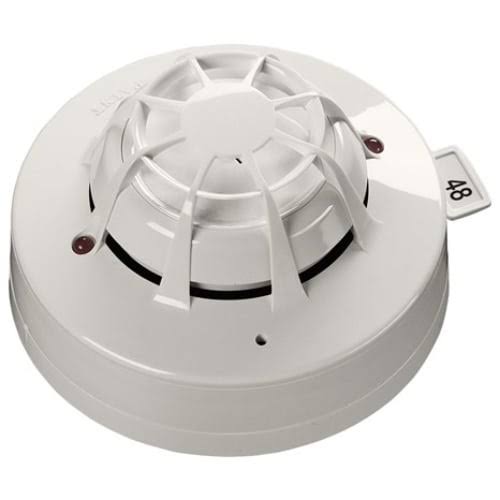
Analogue Addressable & Multi-Sensor Detection
Advanced analogue addressable systems where each device continuously reports its detection level to the panel — enabling drift compensation, pre-alarm alerts, and intelligent sensitivity adjustment by time of day. Multi-sensor detectors combining optical smoke and heat sensing in one device, reducing false alarms in challenging environments including commercial kitchens, dusty production areas, and high-humidity spaces.
Analogue Multi-Sensor Drift Compensation Pre-Alarm
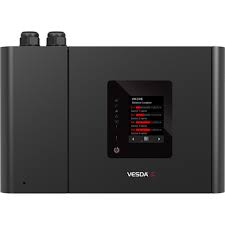
Aspirating Smoke Detection (ASD / VESDA)
Very Early Smoke Detection Apparatus (VESDA) and aspirating smoke detection for high-value, high-consequence environments where conventional point detectors are inadequate — data centres, server rooms, archival stores, museums, clean rooms, and atria. Air is actively drawn through sampling pipes to a highly sensitive laser-based detector, providing smoke detection at particle concentrations many times below the threshold of conventional detectors.
VESDA ASD Data Centres Laser Detection
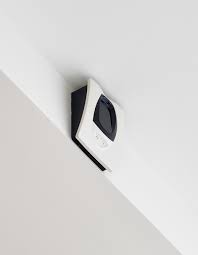
Beam Smoke Detectors
Linear optical beam detectors for wide-span, high-ceiling spaces where conventional point detectors cannot provide adequate coverage — warehouses, aircraft hangars, sports halls, atria, and large industrial buildings. A transmitter projects an infrared beam across the space to a reflector or receiver; smoke in the beam path attenuates the signal and triggers an alarm. Coverage spans up to 100 metres per beam.
High Ceiling Warehouse Hangar 100m Span
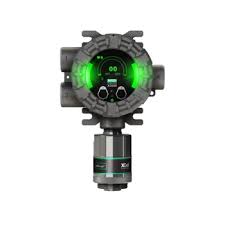
Flame & Gas Detection
Flame detectors using UV, IR, or multi-spectrum sensing for open-area fire detection where smoke may be absent or insufficient — petrochemical, oil and gas, transformer rooms, and industrial process environments. Catalytic bead and infrared gas detectors for flammable and toxic gas detection integrated with the fire alarm panel for combined fire and gas warning systems in hazardous areas.
UV/IR Flame Gas Detection Petrochemical Hazardous Area
Networked & Campus Fire Alarm Systems
Multi-panel networked fire alarm systems for large campuses, hospitals, airports, and multi-building complexes — individual panels per building or zone, networked to a central fire alarm control and indicating equipment (FACIE) at the main fire command centre. Distributed intelligence with central overview, cause-and-effect managed at panel level, and full network status visible from the fire command station.
Multi-Panel Networked Campus FACIE
Addressable Is Not Optional in GCC Commercial Buildings — It Is the Code Requirement
All GCC Civil Defence authorities require addressable fire alarm systems for commercial, institutional, and multi-storey residential buildings. Conventional (zone-only) systems are not accepted for new commercial installations in Saudi Arabia, UAE, Kuwait, or Qatar. Every addressable device must be individually identified on the panel, and cause-and-effect programming must demonstrate that the system responds correctly to each device activation. Virtual Bridge designs exclusively addressable systems for commercial, institutional, and large residential applications — not because it is more expensive, but because it is the correct specification for the building type and the only specification that Civil Defence will approve.
How We Deliver

Detector layout to Civil Defence certificate — one team.

Virtual Bridge manages the complete fire alarm system lifecycle — from detector layout design and cause-and-effect matrix development through panel programming, device installation, cable installation, commissioning, integrated system testing, Civil Defence submission, inspection, and handover documentation.

Fire alarm works are directly coordinated with Virtual Bridge's firefighting team (suppression system release signals), access control team (fire exit door release), HVAC team (smoke damper and AHU shutdown on alarm), and electrical team (power to panels, sounder circuits, and emergency voice evacuation) — under a single low current contracting agreement that eliminates interface gaps in the life-safety system.

Cause-and-Effect Testing — Every Input Verified Against Every Output
A fire alarm system that is installed but not cause-and-effect tested is not commissioned. Cause-and-effect testing verifies that every detector, call point, and suppression signal produces the exact outputs specified in the cause-and-effect matrix — sounders, strobes, door release, HVAC shutdown, lift recall, suppression release, and BMS signals. Virtual Bridge witnesses and documents every cause-and-effect test before Civil Defence inspection. The inspection authority's test of the system is a verification of work already done — not the first time the system is tested.
01
Detector Layout & Cause-and-Effect Design
Detector spacing calculations to EN 54-7/EN 54-5, call point positions, sounder and strobe coverage, zone layout, cause-and-effect matrix, and system design drawings — submitted for Civil Defence pre-approval before installation begins.
02
Material Submittals & Authority Pre-Approval
EN 54-certified panel and device data sheets, cause-and-effect matrix, and system design submitted to Civil Defence for pre-approval. Virtual Bridge manages the submission, responds to authority queries, and obtains pre-approval before procurement and installation.
03
Cable Installation
Fire-rated circuit integrity cable (MICC or fire-rated PVC-SWA) for all alarm circuits — ensuring cables maintain circuit integrity during a fire for the minimum time required to complete evacuation. Installation and testing to BS 5839-1 or applicable GCC standard.
04
Panel Programming & Device Installation
Detector, call point, sounder, and strobe installation. Panel programming — addressing each device, configuring zones, programming cause-and-effect outputs, and setting alarm thresholds. Network configuration for multi-panel systems.
05
Commissioning, C&E Testing & Civil Defence Inspection
Full cause-and-effect testing of every device against every output. Integrated system testing with suppression release, access control, HVAC, lift, and BMS interfaces. Civil Defence inspection management, punch list resolution, and final certificate — with O&M manual and as-built drawings at handover.
Standards & Compliance

Every system engineered to the applicable standard. Authority approved.

Fire alarm systems that do not comply with the applicable standard and receive Civil Defence approval cannot legally occupy the building. Virtual Bridge manages design compliance and authority approval as core deliverables — not afterthoughts.

Primary Standard
EN 54
European fire alarm standard — adopted across all GCC territories
Installation Standard
BS 5839
Fire detection & alarm installation standard
Saudi Authority
SBC+CD
Saudi Building Code & Saudi Civil Defence
UAE Authority
UAE FLS
UAE Fire & Life Safety Code of Practice

Standards We Design To

EN 54 — Fire Detection & Alarm Components
The European product standard series for fire alarm components — EN 54-2 (control panels), EN 54-4 (power supplies), EN 54-5 (heat detectors), EN 54-7 (smoke detectors). All devices must carry EN 54 certification to be accepted by GCC Civil Defence authorities.
BS 5839-1 — Fire Alarm System Design & Installation
The primary UK standard for fire detection and alarm systems in buildings — widely referenced alongside EN 54 in GCC Civil Defence requirements for system design, installation, commissioning, and maintenance.
NFPA 72 — National Fire Alarm & Signaling Code
Referenced by some GCC territories and clients alongside EN 54 — particularly for detector spacing rules and notification appliance coverage requirements in large commercial and industrial facilities.
IEC 60849 — Emergency Voice Evacuation
Standard for emergency voice communication systems — referenced for buildings where a voice evacuation system (EVAC) is required alongside or integrated with the fire alarm system.
EN 12094 — Gaseous Suppression Interface
Standard governing the interface between fire alarm systems and gaseous suppression systems — controlling the detection-to-release sequence, abort switch function, and delay timer configuration for FM-200, Novec, and CO₂ systems.
Circuit Integrity Cabling Standards
Fire alarm cables must maintain circuit integrity during fire — MICC (Mineral Insulated Copper Clad), fire-rated PVC-SWA, or BS 7629 enhanced fire-resistant cables, installed and tested to maintain operation for a minimum period consistent with building evacuation time.

GCC Authority Requirements

Saudi Arabia — SBC & Civil Defence
Saudi Building Code fire protection provisions with Saudi Civil Defence pre-approval for system design and post-installation inspection before occupancy. Addressable systems required for all commercial buildings.
UAE — Dubai Civil Defence & ADCD
UAE Fire & Life Safety Code of Practice — Dubai Civil Defence and Abu Dhabi Civil Defence. Submission drawings, NOC process, inspection, and certificate of completion managed by Virtual Bridge.
Kuwait — General Directorate of Civil Defence
Kuwait GDCD requirements for fire alarm system design, device certification, installation, and testing documentation before issuance of the fire safety certificate.
Qatar — Civil Defence Department
Qatar Civil Defence Department requirements — NFPA and EN 54 referenced, with specific local supplements for high-rise buildings, malls, and healthcare facilities.
Africa — Local Authority Coordination
Virtual Bridge manages fire alarm authority submissions in African project territories — Angola, Zambia, Djibouti, DRC — coordinating with local fire safety authorities based on the applicable national standard.
Full Authority Inspection Management
Civil Defence inspection scheduling, inspection attendance, punch list resolution, re-inspection where required, and final certificate issuance — managed by Virtual Bridge in every territory.
System Integration

A fire alarm that works alone is not enough.

The fire alarm panel is the hub of a building's fire response — triggering suppression systems, releasing fire exit doors, shutting down HVAC, recalling lifts, activating voice evacuation, and alerting the security operations centre. Virtual Bridge designs and delivers all of these integrations under the same contracting team.

Fire Suppression Release
Sprinkler alarm monitoring, gaseous suppression system release (FM-200, Novec, CO₂), deluge valve activation, and kitchen hood suppression release — fire alarm detection triggers suppression via hardwired relay outputs with abort switch and delay timer per EN 12094.
Access Control — Fire Exit Door Release
Automatic release of all fire exit electromagnetic locks on fire alarm activation — a life-safety requirement in all GCC jurisdictions. Integrated via dry relay contact from the fire alarm panel to the access control panel, with fail-safe door hardware to ensure doors always open on power loss.
HVAC — Smoke Damper & AHU Shutdown
HVAC fan shutdown and smoke damper closure on fire alarm to prevent smoke spread through ductwork. Coordinated with the HVAC team — the fire alarm cause-and-effect defines which AHUs and dampers respond to each fire zone, preventing smoke from migrating from the fire zone through the ventilation system.
Lift Recall
Lift car recall to ground floor or designated refuge floor on fire alarm activation — preventing the use of lifts for evacuation and ensuring lift cars are not caught at a floor affected by fire. Integrated via the lift controller's fire input terminal.
Emergency Voice Evacuation (EVAC)
Voice alarm and evacuation system integration — fire alarm panel triggers pre-recorded or live voice evacuation messages over the PA/EVAC system. Phased or simultaneous evacuation, refuge floor announcements, and fire command microphone override.
CCTV Camera Display
Fire zone cameras automatically displayed on the CCTV operator's screen on fire alarm activation — enabling immediate visual verification of the alarm zone and confirmation of evacuation. Integrated under VB's combined fire alarm and CCTV contracting scope.
BMS Integration
Building Management System integration — fire alarm zone status transmitted to BMS for centralised building monitoring, HVAC override coordination, and energy management system override during fire events.
Stairwell Pressurisation Activation
Fire alarm activation triggers stairwell and lobby pressurisation fans — maintaining positive pressure in escape routes to keep them smoke-free during evacuation. Integrated with the HVAC smoke control system under VB's coordinated MEP delivery.
Fire Command Centre Display
Mimic panel and fire command display at the fire command centre (FCC) — graphical building layout showing alarm zones, fault status, and suppression system status for the fire brigade and building management response.
Roller Shutter & Fire Door Release
Fire-rated roller shutters and fire doors released (closed) on fire alarm activation — protecting fire compartmentation boundaries. Integrated via fire alarm relay outputs to shutter controls.
Remote Monitoring & PSIM
Fire alarm panel status transmitted to remote monitoring centre and/or PSIM platform — providing 24/7 monitoring of fire alarm faults and alarm events with automated alert dispatch to facilities management.
Generator Start Signal
Fire alarm panel output to standby generator auto-start on fire alarm activation — ensuring emergency power is available for emergency lighting, fire pumps, and critical life-safety systems during a fire event.
Integration Failures Are the Most Common Cause of Fire Alarm System Deficiencies at Civil Defence Inspection
Civil Defence inspectors test fire alarm systems against their approved cause-and-effect matrix — and the most frequent inspection failures are integration failures: HVAC dampers that do not close on alarm, access control doors that do not release, suppression systems that do not receive the alarm signal. These failures occur when fire alarm, HVAC, access control, and suppression systems are designed and installed by separate contractors without coordinated integration. Virtual Bridge delivers all of these systems under one low current and MEP contracting structure — ensuring integrations are designed, programmed, and tested as a unified life-safety system before Civil Defence inspection.
Sectors We Serve

Every occupancy type. Every detection challenge.

Virtual Bridge has designed and installed fire alarm systems across every major building sector in the GCC and Africa — each with its own detection technology requirements, cause-and-effect complexity, and Civil Defence approval process.

Commercial Office
Addressable multi-loop systems for commercial towers — zoned by floor and area, integrated with HVAC smoke control, access control door release, lift recall, and voice evacuation.
Hospitality
Hotel fire alarm — guest room detection, corridor call points, kitchen multi-sensor detectors, voice evacuation with phased floor messaging, and interface with kitchen hood suppression and sprinkler alarm monitoring.
Healthcare
Hospital fire alarm — Investigate-before-evacuate protocol, clinical area aspirating smoke detection, high-sensitivity detection in operating theatres, staff alarm response integration, and staged evacuation cause-and-effect.
Residential
Addressable systems for apartment towers and residential compounds — apartment-level detection with common area and escape route sounders, and interface with building management for 24/7 monitoring.
Airports
Airport fire alarm — large multi-loop networked systems, aspirating detection in technical areas, beam detectors in high-ceiling terminal zones, interface with airport operations, and SITA-compliant integration.
Data Centres
VESDA aspirating smoke detection for server halls, pre-action suppression release with abort switch, raised floor detection, air-conditioning room detection, and dual-knock detection to prevent accidental suppression discharge.
Industrial & Warehousing
Beam smoke detectors for high-ceiling warehouses, flame detectors for high-hazard process areas, gas detection integration, and interface with deluge suppression and foam systems for industrial fire risk.
Retail & Shopping Malls
Mall fire alarm — large networked systems with atrium beam detectors, food court multi-sensor detection, kitchen hood interface, EVAC voice messaging for public areas, and smoke control system integration for atrium smoke management.
Selected Projects

Fire alarm systems commissioned. Civil Defence approved.

A selection of Virtual Bridge fire alarm and detection system projects across the GCC and Africa.

Airport — Saudi Arabia
King Abdulaziz International Airport
Jeddah, Saudi Arabia
Addressable FA · Multi-Loop · EVAC · Suppression Interface
Hospitality — Saudi Arabia
Carlton Almoaibed Hotel Complex
Dammam, Saudi Arabia · 2014
Hotel FA · Addressable · EVAC · Suppression Release
Airport — Angola
Namibe, Catumbela & Luanda Airports
Angola
Terminal FA · Networked Panels · EVAC · Integration
Residential — Lebanon
ADMA 751
Adma, Lebanon · 8,000 sqm · 2024
Addressable FA · Suppression Interface · BMS Integration
Residential — Under Construction
Ô Bakish Villas
Bakish, Lebanon · 2026
Full Fire Alarm Package · Suppression Interface
Airport — Djibouti
Ambouli International Airport
Djibouti
Terminal FA · Addressable · HVAC Integration · EVAC
Why Virtual Bridge

Life-safety. One team. Complete accountability.

In a life-safety system, accountability cannot be divided. Virtual Bridge delivers fire alarm design, installation, commissioning, integration, and authority approval under one contracting team — ensuring the system performs correctly as a unified life-safety asset from day one.

In-House Design & C&E
Detector layout, cause-and-effect matrix, system design drawings, and Civil Defence submission documents all produced in-house — ensuring the installed system matches the approved design at every point.
Integrated Life-Safety Delivery
Fire alarm coordinated with suppression, access control, HVAC smoke control, EVAC, and CCTV under one contracting team — eliminating the integration failures that cause Civil Defence inspection rejections.
Authority Approval Managed
Civil Defence pre-approval submission, inspection scheduling, punch list resolution, and final certificate — managed by Virtual Bridge across Saudi Arabia, UAE, Kuwait, Qatar, and African territories.
EN 54 Certified Systems Only
Virtual Bridge specifies only EN 54-certified panels and devices — the certification required by all GCC Civil Defence authorities. No uncertified or unverified products are accepted in the supply chain.
Common Questions

Frequently Asked Questions

An addressable fire alarm system is one in which every device on the loop — every detector, call point, sounder, and module — has a unique address, allowing the control panel to identify the exact device that has activated. This means the panel can display "Detector 17, Office Floor 3, Zone 4B" rather than simply "Zone 4" — enabling a much faster and more precise emergency response. GCC Civil Defence authorities in Saudi Arabia, UAE, Kuwait, and Qatar require addressable systems for all commercial, institutional, and multi-storey residential buildings. Conventional (zone-only) systems that identify only the zone rather than the individual device are not accepted for new installations in these territories. Virtual Bridge designs exclusively addressable systems for commercial and institutional applications — it is both the code requirement and the technically correct specification for buildings of any meaningful size.
A cause-and-effect (C&E) matrix is the document — and the corresponding panel programming — that defines what the fire alarm system does in response to each possible activation. For every input (detector activation, call point, suppression flow switch, duct detector), the C&E matrix defines every output: which sounders and strobes activate, which HVAC systems shut down, which smoke dampers close, which access control doors release, which lifts recall, which suppression systems release, which BMS signals are transmitted. The C&E matrix is the engineering document that translates the building's fire strategy into the system's operational behaviour. Civil Defence authorities review the C&E matrix as part of the pre-approval process, and inspect the system against it during the final inspection. A system that deviates from the approved C&E — for example, HVAC that does not shut down on alarm in a zone where the design requires it — will fail inspection. Virtual Bridge develops the C&E matrix as a core design deliverable and programs the panel to match it before commissioning begins.
VESDA (Very Early Smoke Detection Apparatus) is an aspirating smoke detection system that actively draws air through a network of sampling pipes to a highly sensitive central detector. Unlike conventional point detectors that must wait for smoke to reach them by convection or diffusion, a VESDA system samples air from across the protected space and provides detection at smoke particle concentrations many times below the threshold of conventional detectors. VESDA should be specified in environments where early warning is critical and where conventional detectors are inadequate: data centres and server rooms (where fire suppression system discharge causes significant damage and must be initiated at the earliest possible stage), high-value archive stores, museums and art galleries, clean rooms, telecommunications facilities, and high-ceiling spaces where smoke dilution reduces conventional detector effectiveness. It is also specified in environments where conventional detectors would generate frequent false alarms from dust, steam, or aerosols — VESDA's sophisticated signal processing and sampling tube filter design significantly reduce false alarm rates in challenging environments.
Yes — and this interface is one of the most critical integrations in the building's life-safety infrastructure. For gaseous suppression systems (FM-200, Novec, CO₂, Inergen), the fire alarm system provides the detection signal that initiates the suppression sequence — typically requiring activation of two detectors in the protected space (dual-knock detection) to minimise the risk of accidental discharge. The fire alarm panel controls the suppression release relay, the abort switch function, and the pre-discharge alarm and delay timer. For sprinkler systems, the fire alarm monitors sprinkler flow switches and pressure switches, providing alarm indication at the fire alarm panel when the sprinkler activates. For kitchen hood suppression systems, the fire alarm monitors the suppression system's activation. Virtual Bridge delivers both fire alarm and firefighting suppression systems, managing this interface under one contracting team — ensuring the detection-to-suppression-release sequence is correctly programmed and tested during commissioning.
GCC Civil Defence authorities require fire alarm cables to maintain circuit integrity during a fire — ensuring that the alarm signals, sounder circuits, and suppression release outputs continue to function for the duration of the evacuation. The cable type required depends on the territory and the specific circuit: Mineral Insulated Copper Clad (MICC) cable provides the highest circuit integrity rating and is required for critical circuits in some GCC territories; Enhanced fire-resistant cables to BS 7629 are widely accepted and provide circuit integrity to specified fire exposure conditions; Fire-rated PVC armoured cable (SWA) with a fire-resistant inner sheath is used for general fire alarm wiring. The critical requirement is that cables are tested and certified to maintain circuit integrity under fire conditions — not simply cables described as "fire resistant" without supporting test certification. Virtual Bridge specifies and installs circuit integrity cables appropriate to the Civil Defence requirements of each territory and the specific circuit function.
Yes. Virtual Bridge provides planned preventive maintenance (PPM) contracts for installed fire alarm systems — covering quarterly, biannual, and annual maintenance as required by BS 5839-1 and the applicable GCC authority maintenance requirements. Maintenance includes detector sensitivity testing (using calibrated test equipment to verify each detector's response is within its specified range), call point functional test, sounder and strobe output verification, battery and power supply test, panel fault log review, cause-and-effect output test, and suppression system interface relay test. Annual maintenance includes a full walk test of every device in the system. Fire alarm maintenance records are critical for insurance compliance and Civil Defence licence renewal — Virtual Bridge provides maintenance certificates and log books at each service visit. Reactive call-out for panel faults, detector failures, and false alarm investigations is also available under maintenance agreements across all Virtual Bridge territories.
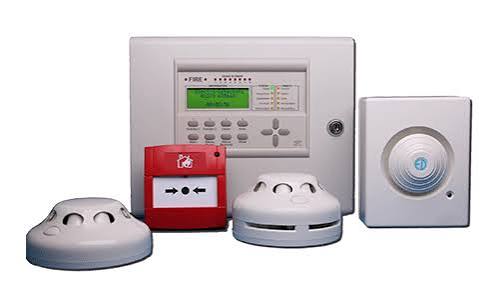
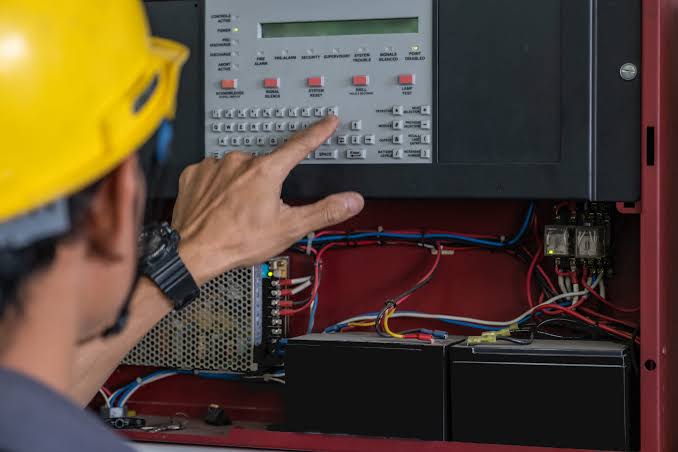
Ready to discuss your fire alarm system scope?

Whether you need an addressable system for a commercial building, VESDA for a data centre, a networked campus system, or a complete fire alarm and suppression integration — the Virtual Bridge low current team is ready to respond within one business day.

Related Services

Other Life-Safety & ELV Disciplines

Firefighting Systems
Sprinkler, hydrant, gaseous, and foam suppression systems — receiving the fire alarm detection signal and releasing suppression on alarm activation.
View service
Access Control Systems
Fire exit door release on fire alarm activation — integrated under the same low current contracting team for coordinated life-safety system commissioning.
View service
CCTV & Surveillance
Fire zone camera display on alarm activation — cameras called up automatically at the operator station for visual verification of the alarm zone.
View service
HVAC & Smoke Control
HVAC shutdown, smoke damper closure, and stairwell pressurisation on fire alarm — coordinated with fire alarm cause-and-effect under VB's integrated MEP delivery.
View service