virtual bridge

Pumping Stations

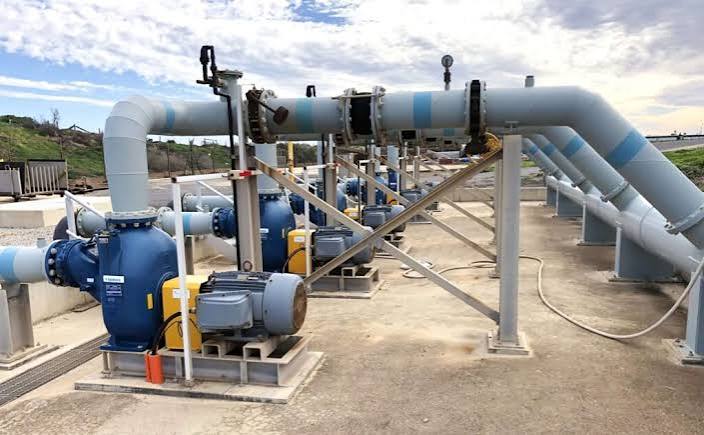
Virtual Bridge designs, supplies, installs, tests, and commissions pumping stations for the full range of fluid transfer applications across GCC and African infrastructure and building projects — from domestic cold water booster sets and sewage lifting stations to fire suppression pump rooms, irrigation pump stations, and large-scale infrastructure booster stations for water networks. A&S Mechanical & Renewable Energy, a Virtual Bridge group company with 25+ years of regional mechanical contracting expertise, delivers every pumping station as a complete engineered system: hydraulic design, equipment selection, civil interface coordination, electrical and controls installation, commissioning, and handover documentation.

Mechanical Contracting Division — Virtual Bridge Co.

Group Expertise
25+
Years via A&S Mechanical & Renewable Energy
Station Types
6+
Water supply, sewage, fire, irrigation, stormwater & industrial
Pump Capacity
Any
Small booster sets to large infrastructure pumping stations
Delivery Model
Design–Build
Hydraulic design through to commissioning certificate
Water Supply Booster
Cold water pressurisation for buildings
Sewage Lifting
Submersible sewage pump stations
Fire Pump Rooms
NFPA 20 — duty, standby & jockey
Irrigation Pumping
Landscape & agricultural systems
Controls & SCADA
Automation, telemetry & remote monitoring
Pumping Station Types

Every fluid. Every application. Engineered to perform.

Virtual Bridge designs and installs pumping stations for every fluid transfer application — each engineered from hydraulic first principles, specified with the right pump technology for the duty, and commissioned to verify performance before handover.
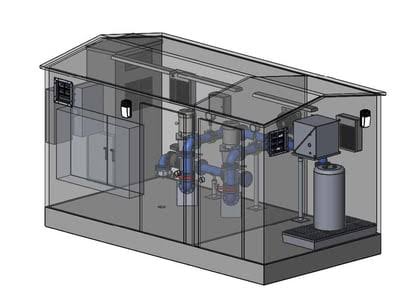
Domestic Water Booster Stations
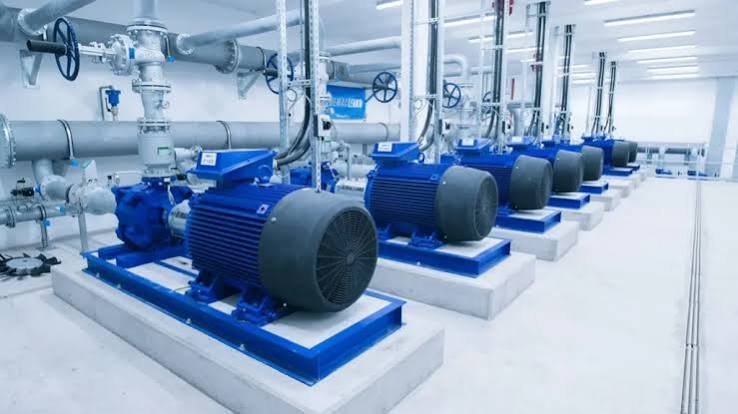
Variable speed drive (VSD) booster sets for cold water pressurisation in commercial towers, residential buildings, hotels, and campus developments. Duty/standby pump configuration, pressure vessel, pressure transducer controls, high and low level alarms, and BMS interface — sized from hydraulic demand calculations to maintain constant pressure at all draw-off points regardless of occupancy load.
VSD Booster Sets D/S Configuration BMS Interface High-Rise
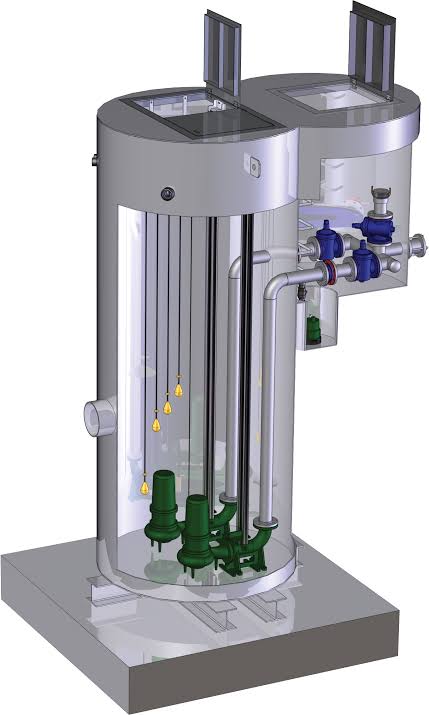
Sewage & Foul Water Lifting Stations
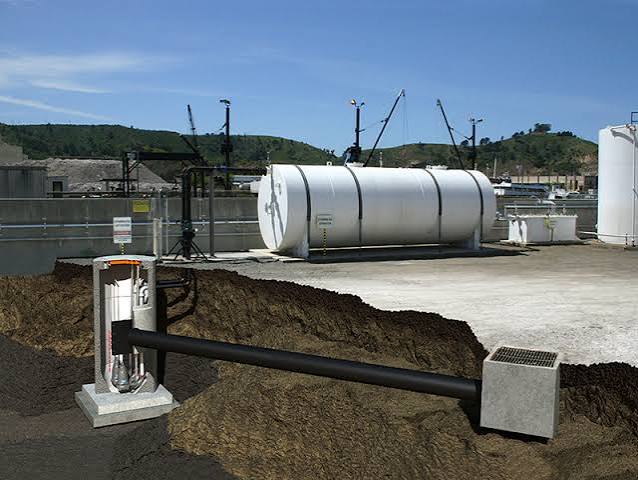
Submersible sewage pump stations for below-ground drainage that cannot drain by gravity — wet well design, duty/standby submersible pumps, rising main, non-return valves, and control panel with high-level alarm and telemetry. From single pump sump pits serving individual basement areas to large wet well pumping stations serving building complexes and infrastructure drainage networks.
Submersible Wet Well Rising Main Telemetry
Fire Suppression Pump Rooms
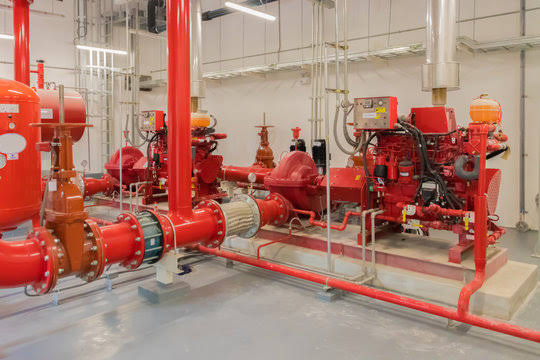
NFPA 20-compliant fire pump installations — electric main fire pumps, diesel standby fire pumps, jockey (pressure maintenance) pumps, automatic transfer switches, pump controllers, suction and delivery headers, and test loop pipework. Sized from hydraulic calculations to meet the sprinkler system demand at the required residual pressure, with performance test to verify the full pump curve from shutoff to overload.
NFPA 20 Electric + Diesel Jockey Pump UL Listed
Irrigation & Landscape Pump Stations
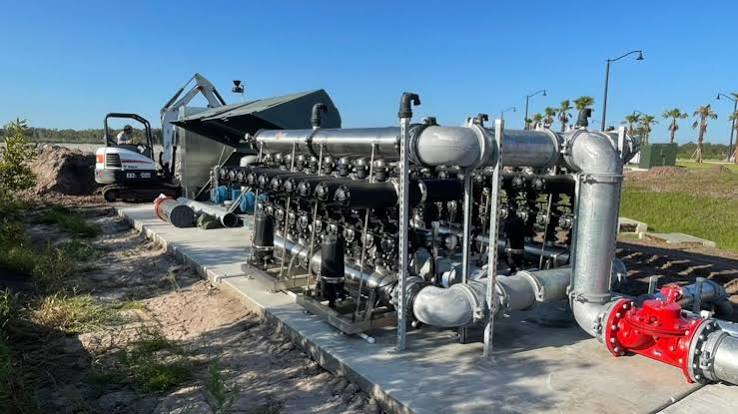
Pump stations for landscape irrigation systems, agricultural irrigation, and treated sewage effluent (TSE) irrigation networks — sized for peak flow demand with filter stations, fertigation injection, flow metering, and zone control valve interfaces. VSD pumping for energy-efficient variable flow operation across the irrigation network.
Landscape TSE Irrigation VSD Zone Control
Stormwater & Surface Water Pumping
Stormwater pumping stations for low-lying areas, car park drainage sumps, and sites where gravity connection to the municipal storm drain is not possible. Wet well design, submersible stormwater pumps, floating ball level controls, high-capacity duty/standby configuration for peak storm event flows, and rising main to the discharge point.
Stormwater Car Park Sump High Capacity Auto Level
Industrial & Infrastructure Pump Stations
Large-scale pump stations for infrastructure water networks, industrial process fluid transfer, cooling water distribution, and seaport or port facility fluid management. Horizontal split-case and vertical turbine pump configurations, variable speed drives, SCADA integration, and full telemetry for remote monitoring and control of distributed pump station networks.
Infrastructure SCADA Split-Case Vertical Turbine
Every Pumping Station Is an Engineered System — Not an Equipment Selection Exercise
A pump station that moves the right volume at the right pressure under all operating conditions — from minimum overnight demand to peak daily load, from normal duty to standby pump operation — requires first-principles hydraulic design, not catalogue selection. Virtual Bridge performs full system head calculations, pump selection to the operating point on the manufacturer's curve, cavitation (NPSH) analysis, and part-load efficiency optimisation for every station it designs and installs.
How We Deliver

Hydraulic design to commissioning certificate — one team.

Virtual Bridge manages every stage of the pumping station lifecycle — hydraulic design, civil interface, equipment procurement, electrical and controls installation, commissioning, and performance verification. A&S Mechanical's 25+ years of regional mechanical expertise and Virtual Bridge's integrated MEP delivery model ensures every pumping station is designed, built, and handed over under a single point of responsibility.

Pump station works are directly coordinated with Virtual Bridge's electrical team (MCC and control panel power, motor protection, ATS for diesel pumps), civil interface (wet well construction, equipment bases, access hatches), plumbing team (pipework interfaces), and where applicable the firefighting team (fire pump room coordination with sprinkler system hydraulics).

Pump Station Performance Is Only Verified at Commissioning
A pump that appears to be running is not a pump that is performing to design. Virtual Bridge carries out full performance testing at commissioning — measuring actual flow and pressure at the system operating point against the design hydraulic grade line — and issues performance test certificates confirming the station meets its design duty before handover.
01
Hydraulic Design & Pump Selection
System head calculations, flow demand analysis, pump selection to the manufacturer's curve at the design operating point, NPSH analysis, motor sizing, and pipe sizing for suction and delivery mains. Submitted with equipment submittals for consultant review.
02
Civil & Structural Interface
Pump base design, wet well dimensioning (for submersible stations), access hatch and ventilation requirements, cable and pipe entry details — coordinated with the civil and structural contractor before construction begins.
03
Equipment Procurement & Inspection
Procurement of pumps, motors, control panels, valves, and instrumentation from approved manufacturers. Factory test certificates for pumps (performance curve confirmation) and control panels (FAT) prior to delivery to site.
04
Mechanical & Electrical Installation
Pump installation, pipework, valves, instrumentation, and electrical connections — including motor starters or VSD panels, control wiring, and interface signals to BMS or SCADA. Coordinated with civil completion and electrical supply availability.
05
Commissioning & Performance Testing
System flushing, pump start-up, control panel functional testing, duty/standby changeover, alarm testing, BMS integration verification, and performance test at design flow and pressure — with performance test certificate, O&M manuals, and as-built documentation at handover.
Technical Capabilities

Pump technology, controls, and scope — in full.

A reference of Virtual Bridge's pumping station technical scope — covering pump technologies, control system types, standards compliance, and the range of work our teams are equipped to deliver.

Pump Types
All
Centrifugal, submersible, end-suction, split-case, turbine
Fire Pump Standard
NFPA 20
Electric + diesel fire pump installations
Controls
VSD/PLC
Variable speed, PLC, SCADA & BMS integration
A&S Backing
25+
Years mechanical contracting via A&S Mechanical

Pump Technologies

End-Suction Centrifugal Pumps
The standard pump type for most building water supply, HVAC chilled water, and low-head drainage applications — cost-effective, maintainable, and widely supported by local service infrastructure.
Submersible Sewage & Drainage Pumps
Submersible sewage pumps for wet well lifting stations — solids-handling impeller designs, auto-coupling systems, and guide rail installation for safe pull-out maintenance without wet well entry.
Horizontal Split-Case Pumps
For high-flow, low-to-medium head infrastructure applications — fire pump duty (NFPA 20), large irrigation networks, and infrastructure water transfer where high reliability and easy bearing maintenance are priorities.
Vertical Turbine Pumps
For deep well, sump, or tank installations where the motor must be above the fluid level — fire pump duty from underground tank suction and large-scale infrastructure pumping from storage reservoirs.
Multistage Inline Pumps
For high-pressure water supply booster applications — compact footprint for plant room installations, multiple impeller stages for high-rise building pressurisation.
Diesel Engine-Driven Fire Pumps
NFPA 20-listed diesel fire pumps for standby duty — ensuring fire suppression capability is maintained even on complete loss of electrical supply to the building.

Controls, Monitoring & Integration

Variable Speed Drives (VSDs)
VSD control for constant pressure water supply, energy-efficient irrigation pumping, and HVAC pump variable flow — directly reducing pump energy consumption at part load.
PLC Control Panels
PLC-based pump control panels for multi-pump stations — duty/standby sequencing, alternation, alarm management, and local HMI display for operator status monitoring.
SCADA & Telemetry
SCADA integration for remote monitoring and control of distributed pump station networks — real-time flow, pressure, and alarm data transmitted to a central operations centre.
BMS Integration
Pump station status, alarm, and energy data integration with the building management system — for centralised building operations monitoring and energy reporting.
Instrumentation — Flow, Pressure & Level
Electromagnetic flowmeters, pressure transmitters, ultrasonic level sensors, and float switches — providing accurate process data for pump control logic and performance monitoring.
Automatic Transfer Switches (ATS)
ATS for diesel fire pump diesel battery start and mains power monitoring, and for standby generator supply to pump station MCC on mains power failure.
Sectors We Serve

Every building type. Every infrastructure application.

Virtual Bridge has delivered pumping stations across every major building sector and infrastructure type in the GCC and Africa — from high-rise domestic booster sets to large-scale seaport infrastructure pump stations.

Commercial & Residential
Cold water booster sets for high-rise towers, sewage lifting stations for basement levels, fire pump rooms, and rainwater harvesting pump stations for commercial and residential developments.
Hospitality
Hotel booster stations, sewage lifting for kitchen and basement areas, fire pump rooms, pool circulation pump stations, and irrigation pump stations for hotel landscaping.
Healthcare
Hospital water supply booster sets, medical waste pump stations, fire pump rooms with N+1 redundancy, and specialist process water pumping for clinical and laboratory environments.
Industrial & Warehousing
Process water transfer, cooling water pump stations, industrial drainage lifting, stormwater pumping, and fire pump rooms for large industrial complexes and logistics warehouses.
Seaports & Infrastructure
Port infrastructure pump stations — bilge and ballast water management, fire water supply, stormwater pumping for port areas, and large-scale water supply booster stations for port facilities.
Airports
Airport terminal water supply booster stations, fire pump rooms meeting airport fire authority requirements, fuel interceptor pump stations, and surface water pumping for large paved areas.
Landscape & Agriculture
Irrigation pump stations for large landscape areas, golf courses, and agricultural irrigation — including TSE irrigation pump stations using treated sewage effluent as per GCC sustainability requirements.
Government & Civic
Public building water supply stations, municipal drainage lifting stations, government campus fire pump rooms, and water supply booster stations for multi-building government facility complexes.
Selected Projects

Pumping stations delivered. Tested and performing.

A selection of Virtual Bridge and A&S Mechanical pumping station projects across the GCC and Africa.

Hospitality — Saudi Arabia
Carlton Almoaibed Hotel Complex
Dammam, Saudi Arabia · 2014
Cold Water Booster · Fire Pump Room · Sewage Lift
Airport — Saudi Arabia
King Abdulaziz International Airport
Jeddah, Saudi Arabia
Fire Pump Room · Water Booster · Stormwater Pumping
Seaport — DRC
Banana Seaport
Democratic Republic of Congo
Infrastructure Water Supply · Fire Pump · Drainage Lift
Residential — Lebanon
ADMA 751
Adma, Lebanon · 8,000 sqm · 2024
Water Booster Set · Sewage Lift · Irrigation Pump
Airport — Angola
Namibe, Catumbela & Luanda Airports
Angola
Terminal Water Booster · Fire Pump Rooms · Drainage
Residential — Under Construction
Ô Bakish Villas
Bakish, Lebanon · 2026
Water Booster · Sewage Lift · Irrigation Station
Why Virtual Bridge

Engineered from first principles. Tested before handover.

Virtual Bridge's pumping station delivery is backed by A&S Mechanical's 25+ years of regional mechanical engineering expertise and Virtual Bridge's integrated MEP delivery capability — combining hydraulic design, electrical installation, and controls commissioning under one contracting team.

Hydraulic First Principles
Every pump station designed from system head calculations, pump curve analysis, and NPSH verification — not catalogue system selection. Performance at the actual operating point is modelled before equipment is ordered.
Performance Testing at Commissioning
Flow and pressure measurement at the system operating point confirms the station performs to its design duty. Performance test certificates issued for every station — not just a report that the pump is running.
Integrated MEP Delivery
Pump station mechanical works directly coordinated with VB's electrical team (MCC, ATS, motor protection), plumbing team (suction and delivery pipework), and firefighting team (fire pump room interface with sprinkler hydraulics).
Regional Experience
25+ years of pump station delivery across Saudi Arabia, Lebanon, and Africa — with knowledge of regional authority requirements, utility supply conditions, and the specific demands of GCC building environments.
Common Questions

Frequently Asked Questions

A duty pump is the primary pump that operates under normal conditions to meet the system demand. A standby pump is a second, identical pump that starts automatically if the duty pump fails — ensuring continuous operation of critical systems. For most building water supply and drainage applications, a duty/standby (D/S) configuration is standard, with automatic alternation between the two pumps to equalise running hours. For fire pump rooms, NFPA 20 requires both an electric motor-driven main pump and a diesel engine-driven standby pump, providing fire suppression capability even on complete loss of electrical supply. For critical applications such as hospitals and data centres, N+1 or 2N redundancy configurations provide additional resilience.
NPSH — Net Positive Suction Head — is the minimum pressure required at the pump suction inlet to prevent cavitation (vapour bubble formation and collapse inside the pump impeller). Every pump has a required NPSH value (NPSHR) that must be lower than the available NPSH (NPSHA) of the installation — the actual pressure at the suction inlet accounting for suction lift, pipe friction losses, and fluid vapour pressure. If NPSHA is insufficient, the pump will cavitate — causing noise, vibration, impeller damage, and reduced performance. In GCC conditions, where desalinated water supply is often at elevated temperatures and stored in roof tanks with limited static head, NPSH analysis is an essential part of every pump selection exercise. Virtual Bridge performs NPSH calculations for every pump station it designs.
NFPA 20 — Standard for the Installation of Stationary Pumps for Fire Protection — governs fire pump installations and is adopted across GCC territories as the primary reference standard. Key requirements include: the fire pump must be UL listed or FM approved; an electric motor-driven main pump and a diesel engine-driven standby pump are required for most applications; a jockey (pressure maintenance) pump is required to maintain system pressure without cycling the main pump; the fire pump must be capable of delivering its rated flow at minimum 65% of rated pressure, 100% of rated flow at rated pressure, and 150% of rated flow at minimum 65% of rated pressure; the diesel engine must start automatically on mains power failure; and the pump must be tested at installation by operating through the full performance curve. Virtual Bridge designs, installs, and tests all fire pump rooms to NFPA 20 requirements and manages Civil Defence submission and inspection.
Variable speed drives allow pump motor speed to be varied in response to system demand — rather than running at fixed speed with flow controlled by a throttle valve or bypass. The energy saving from VSD control is significant: pump power consumption varies approximately with the cube of speed, so reducing pump speed by 20% reduces power consumption by approximately 50%. For water supply booster stations that operate continuously at varying demand — with peak demand during daytime occupancy and minimum demand overnight — VSD control provides substantial energy savings over the building's lifetime. VSD booster sets also maintain constant pressure more accurately than fixed-speed pump sets, improving water supply consistency across the building. Virtual Bridge specifies VSD booster sets as standard for domestic water supply applications and for all HVAC pump installations where variable flow is required.
Virtual Bridge delivers both — from small single-pump sump pits serving individual basement areas to larger wet well sewage lifting stations serving building complexes and infrastructure drainage networks. For larger wet well stations, the scope includes wet well sizing (based on pump flow rate and acceptable start frequency), guide rail and auto-coupling installation for submersible pump drop-in and pull-out, control panel with level sensors, duty/standby alternation, high-level alarm, and dry run protection. The rising main from the pump station to the gravity discharge point is included in scope, along with non-return valves and isolating valves on the discharge. For stations requiring authority approval (where they discharge to municipal sewers), Virtual Bridge manages the utility submission and approval process.
Virtual Bridge carries out the following tests before pump station handover: system flushing to remove construction debris from pipework; pump performance testing — measuring actual flow (by clamp-on ultrasonic flowmeter or inline meter) and pressure (by calibrated gauge) at the design operating point and comparing against the pump curve; duty/standby changeover test — confirming automatic switchover on duty pump trip; alarm testing — confirming all alarms (high level, low level, pump fault, power failure) activate and display correctly; VSD control testing — confirming constant pressure delivery across the flow range from minimum to maximum demand; and for fire pump rooms, the full NFPA 20 performance test across the pump curve from shutoff to 150% rated flow. Performance test certificates are issued for all tests and included in the handover documentation package alongside as-built drawings and O&M manuals.

Ready to discuss your pumping station scope?

Whether you need a domestic water booster set, a fire pump room to NFPA 20, a sewage lifting station, or a large-scale infrastructure pump station — the Virtual Bridge mechanical engineering team is ready to respond within one business day.

Related Services

Other Contracting Disciplines

Water Supply & Drainage
Domestic cold and hot water, sanitary drainage, rainwater, and greywater systems — the pipework networks that feed and drain the pump stations.
View service
Firefighting Systems
Sprinkler and hydrant systems — the fire suppression networks that the fire pump room supplies. Coordinated design with pump hydraulics under one mechanical team.
View service
Electrical Contracting
MCC and control panel power supply, motor protection, ATS for diesel fire pumps, and BMS integration — coordinated with pump station installation under VB's integrated MEP model.
View service
HVAC Systems
HVAC chilled water pump stations, condenser water pump stations, and cooling tower pump systems — delivered alongside MEP works under the same mechanical contracting team.
View service